
Pennsylvania's Surviving City Directory Runs
Pennsylvania has no single directory archive that covers every town. Philadelphia offers the best-documented Pennsylvania sequence, while Pittsburgh, Erie, Scranton, Reading, Allentown, Harrisburg, York, Lancaster, Bethlehem, and smaller boroughs depend on their own libraries and historical groups. The table starts with the strongest known runs and shows where to check before assuming a year is missing.
| Collection | Years and Series | Where Held | Access |
|---|---|---|---|
| Philadelphia city directories | 1785-1936, with gaps; Gopsill, Boyd, Polk, McElroy, Pinkertons, Howe's | Free Library, City Archives, Historical Society of Pennsylvania | Print and microfilm; check each catalog for access |
| Cole's Cross Reference | 1973-2007 microfilm; 2009-2020 print | Free Library of Philadelphia | Reverse lookup by street and number |
| Telephone and address books | White/yellow pages 1879-2007, gaps; address books 1927-1969 | Free Library Newspapers and Microfilm Center | Print/microfilm; listed subscribers only |
| 1889 Philadelphia street directory | Rufus Clinton Hartranft, Official Street Directory | Library of Congress | Digitized images and text are free to reuse |
| Other Pennsylvania city runs | Town- and publisher-specific | Public libraries, historical societies, local archives | Confirm exact years, format, and appointment rules |
Philadelphia's 1785-1936 sequence has known gaps, including 1928 and 1931-1934. Those breaks do not describe other Pennsylvania cities. Search a local catalog under several terms, including directory, register, annual, guide, and yearbook, then ask a reference librarian whether the book is print, microfilm, or online. Some digitized databases are available only inside a library branch.
Read Names in Pennsylvania City Directories
Philadelphia's best-documented Pennsylvania volumes usually list residents alphabetically, then give an occupation and address. Later issues may add a spouse's first name. Treat each field as a clue tied to that book's year, not as a full account of everyone in a house. The Free Library says an entry generally reflects the preceding year, so record the printed edition year separately from the likely address period.
| Printed name | Copy initials, spelling, and any spouse name exactly as shown. |
|---|---|
| Occupation | A trade or calling can help separate two people with the same name. |
| Address | Keep the number and street spelling; record household marks only after checking that volume's key. |
| Household mark | Owner, renter, or boarding notation varies by volume and should be read with its key. |
| Widow notation | “Wd.” or “wid” may point to a deceased spouse, but does not prove identity alone. |
- Criss-cross directory
- A street-and-number listing that can identify a listed occupant when the name is unknown.
- Householder index
- An index that organizes entries by a household head rather than listing every person in a home.
- Abbreviation key
- The volume's guide to short forms such as “Do” for ditto, “Et. Ux.” for and wife, and “Wd.” for widow of.
Check the page before and after the entry, plus the front matter and abbreviation list. A mark that looks like an owner symbol in one publisher's book may have a different meaning in another. When a directory finding needs current verification, use an official source such as the Pennsylvania resident lookup process.
Philadelphia City Directory Years
Philadelphia's Free Library Newspapers and Microfilm Center holds annual city directories from 1785 through 1936, though not every issue survives. The named series include Gopsill's, Boyd's, Polk's, McElroy's, Pinkertons, and Howe's. Compare the publisher and title page before treating two volumes as the same series. The City Archives reports the same broad 1785-1936 run and maintains a historic street index.
The books changed as their city changed. The 1811 volume includes a separate “Directory of Coloured Persons.” Editions from 1930 and 1936 list wives' first names, which can help distinguish households with repeated surnames. For other Pennsylvania municipalities, the latest surviving book may be much earlier or later; the Philadelphia end date is not a statewide publication cutoff.
Use the library's directory fact sheet to check issue gaps and where the microfilm is held. The Philadelphia City Archives is a second route for descriptions and related historic records.
Where Pennsylvania Historical Directories Survive
Across Pennsylvania, start in the town's public library catalog, then check the county historical society, State Archives, and FamilySearch. Philadelphia's Free Library has neighborhood files, local biographies, county and government files, an obituary/death-notice database covering 1860 to the present, newspapers from 1719 to the present, and the directory and microfilm center. Its reference staff can help identify the right title and route a request. Call before traveling because a catalog record may not show whether an item is on the shelf, on film, or available by appointment.
The State Archives research room in Harrisburg is open Wednesday through Friday and the second Saturday, 9 a.m. to 4 p.m. First-time users of original records must register, and restricted materials require an appointment. Its county guides point to holdings at local courthouses and FamilySearch rather than claiming that every county book is in Harrisburg. For digital material, the PA Digital Archives has keyword, exact-phrase, wildcard, and advanced search options.
The Historical Society of Pennsylvania adds directories, social registers, business books, fire-insurance surveys, and manuscript collections. Its digital catalog and collections offer a route into those holdings.
The image shows the Historical Society of Pennsylvania's digital collections catalog. A catalog result may describe a collection without placing the whole volume online, so check format and access terms with the holding institution.
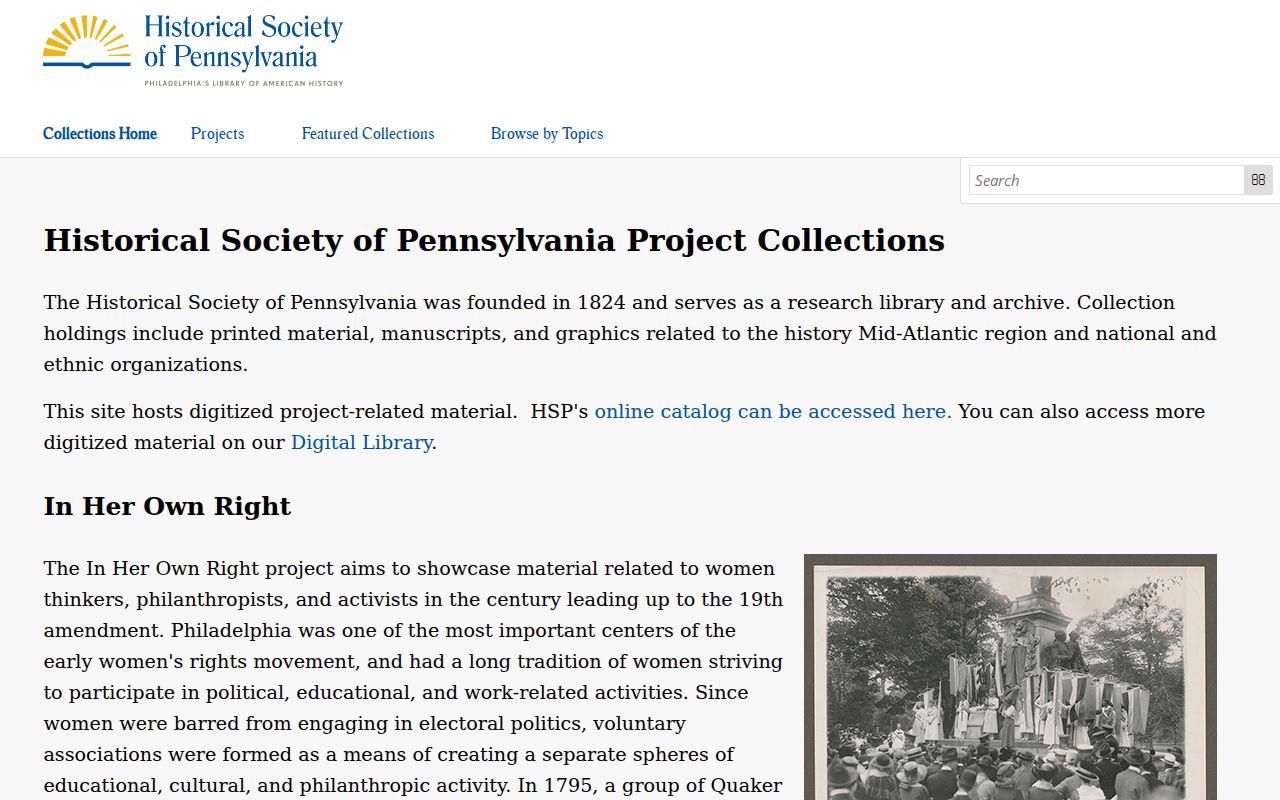
Use the catalog to locate collection descriptions and confirm whether specific volumes are scanned, on microfilm, or available in person.
Cole's Pennsylvania Reverse Directory Years
For a Pennsylvania address, a reverse or criss-cross directory can turn a known number into the name of a person listed there. Philadelphia's Cole's Cross Reference Directory arranges streets alphabetically and numbers in sequence. It often gives a resident's name, telephone number, and length of time at the address. The Free Library holds Cole's on microfilm for 1973-2007 and in print for 2009-2020. The gap between those runs should remain visible in your notes.
Philadelphia telephone books add other paths. White and yellow pages span 1879-2007 with gaps in the fact sheet, and address telephone directories cover 1927-1969. The earlier phone books are useful when a name is uncertain; the street-ordered Cole's volumes help when a house number is known. Each only covers listed subscribers, so a missing entry is not proof that a home was empty.
For ownership questions, the Philadelphia Realty Directory and Service (1926-1959) is arranged by street and number, with earlier issues also indexed by owner. It can suggest a property chain, but the deed remains the stronger record of a transfer.
Pennsylvania Directory Street-Name Clues
In Pennsylvania, a familiar house number may hide under an older street name. Philadelphia's 1898 and 1910 directories include conversion tables from old street names to new ones, and the City Archives' historic street index tracks locations and name changes. Check both tools before deciding an address is absent. The table or index can connect a family entry to the right modern block without guessing from a similar name.
Other Pennsylvania towns may have changed a road through borough consolidation, annexation, renaming, or a shift from rural routes to numbered streets. The local catalog, municipal records officer, and historical society are the fallback when no conversion list appears online. Keep the old spelling beside the current one, along with the county and municipality named in the source.
Match Pennsylvania Directories to Census Years
For a Pennsylvania household, a directory and a census answer different questions. The directory is usually current for the prior year and can list an address, spouse clue, or calling. A census is a household snapshot made on an enumeration date. Pennsylvania's federal schedules survive for 1790-1930 except 1890; the 1950 census opened in 2022 under the 72-year release rule. The loss of the 1890 census in a 1921 fire makes other sources especially useful for families in that decade.
- Choose a directory year near the census date and write down the person, address, spouse clue, and printed spelling.
- Find the household in the nearest released census, then compare its members and address with the directory entry.
- Use a second directory year to see whether a move or name change happened before or after the census date.
Do not force the two sources to match exactly. A person may move between editions, a directory entry may lag a change, or the census taker may record the family at a different time. A church register, newspaper, tax list, or probate file can fill the interval.
Pennsylvania Directory Clues Beyond the Book
Pennsylvania newspaper obituaries, wedding notices, social items, legal advertisements, and probate notices can confirm a name or explain why it vanished from a later directory. The Free Library's local-history desk maintains obituary and death-notice indexes; county libraries and historical societies may hold local newspaper microfilm. Search the paper that served the address, not only a statewide name index.
Cemetery and funeral-home records can add a burial date, lot, next of kin, or earlier community. Church and parish registers may preserve baptisms, marriages, and burials when a civil record is absent. None of those details alone prove that a person lived at a given street number, so keep each source's role clear. A directory places a listed name; a census identifies a household on one date; a cemetery record documents burial.
Trace Pennsylvania Households Through City Directories
For Pennsylvania family history, follow one household through nearby issues instead of relying on a single name hit. Migration and spelling shifts make it useful to search a spouse, initials, street, parish, cemetery, and a known calling as well as the surname. A surname may appear in Germanic, Anglicized, Polish, Slovak, Italian, or abbreviated forms; a church register may use a baptismal name. A directory can mark a person as widowed or print a shortened name, so the local key helps make entries readable.
- Find the first likely entry and record its book title, edition year, spelling, address, and household marks.
- Check nearby editions for the name and address, then search the street-order section when the name is unknown.
- Compare the address with the census, deed, newspaper, church, or cemetery record closest to the same period.
- Follow a changed street name or number through the local conversion table, map, or legal description.
- Close a family branch with an obituary, probate file, or cemetery record, and note what each source confirms.
A name that disappears may signal a move, death, a missed edition, or a change in how the household was listed. Compare the next address, obituary and probate trail before settling on one explanation. Pennsylvania records are split among institutions, so write down the catalog, years checked, and gaps as part of the family history.