
Pennsylvania Resident Lookup Records
Pennsylvania has no single statewide resident roll. County offices, state tools and local archives answer different questions. Compare records, not just one name match.
| Record | What It Confirms | Where to Search | Access |
|---|---|---|---|
| Assessment and tax roll | Owner, parcel and tax-mailing address | County assessment office or GIS | Local fields vary; ownership is not occupancy |
| Voter status | Registration and polling details | Department of State status lookup | Free; protected voters may not show normally |
| UJS docket | Participant, court, case number and disposition | UJS Public Web Docket Sheets | Restricted or unavailable files are omitted |
| Birth and death indexes | Name, date, county and certificate lead | PHMC / State Archives | Public only after age limits |
| Marriage, divorce and probate | Spouse, case, executor or estate clue | County court or Register of Wills | Local rules; sealed material stays restricted |
| Business and professional records | Entity filing or license status | Business Filing Services and PALS | Search by known entity or license details |
| Directories and obituaries | Dated address or family clue | Libraries, newspapers and archives | Year and listed-person gaps apply |
| State custody and registry | Custody or public registry entry | DOC Locator or Megan's Law site | Follow each custodian's use limits |
A name and county point toward court records; an address points toward an assessment card. Family events call for vital indexes or probate. Pennsylvania's 67 counties keep local records.
Verifying Pennsylvania Resident Records
Compare independent entries using a middle initial, prior surname, spouse, municipality or date. Try name-order and spelling variants, but never join records on a common surname alone. Pennsylvania's county is a useful filter because courts and assessment offices are local.
For a current address, start with a parcel and separate its owner from any occupant. A Pennsylvania assessment card may show the situs, or physical location, and a different tax-mailing address. Voter status, a docket or a vital index adds another lead, not a household list.
- Search the county parcel by name or address; note parcel, municipality and mailing fields.
- Check voter status, or ask the Pennsylvania county office if no match appears.
- Search UJS in the filing county; compare court, date, case type and party role.
- Check a vital or probate index, then request a custodian copy if needed.
Note the fields that support a match. If they conflict, ask the custodian; staff can explain a record, not identify a stranger. For an entire block, use the Pennsylvania street directory.
- Docket
- A court's case index and events, not the full case file.
- Index and image
- An index locates a record; an image is a scan of the source document.
- Certified copy
- A copy the custodian attests is official.
Pennsylvania Resident Court Docket Searches
Pennsylvania's UJS Public Web Docket Sheets cover available appellate, Common Pleas and Magisterial District Judge matters. Select Participant Name and the filing county, then narrow by first name, date, status or docket type.
| Search field | How it helps | Use note |
|---|---|---|
| Search By | Participant name or docket number | Exact docket route needs its number |
| County | Filing court area | Choose the filing county |
| Participant names | Indexed case party | Try spelling and punctuation variants |
| Date of birth | Same-name check | Optional |
| Docket type and status | Narrows results | Options vary by court |
| Filed start / end | Limits the date range | Enter month, day and year |
UJS search help explains the fields and limits. Results show docket number, court and caption; a sheet may add parties, events and disposition. Juvenile, sealed, expunged, limited-access or destroyed files may be absent. The captured Pennsylvania docket search shows its name and county controls.
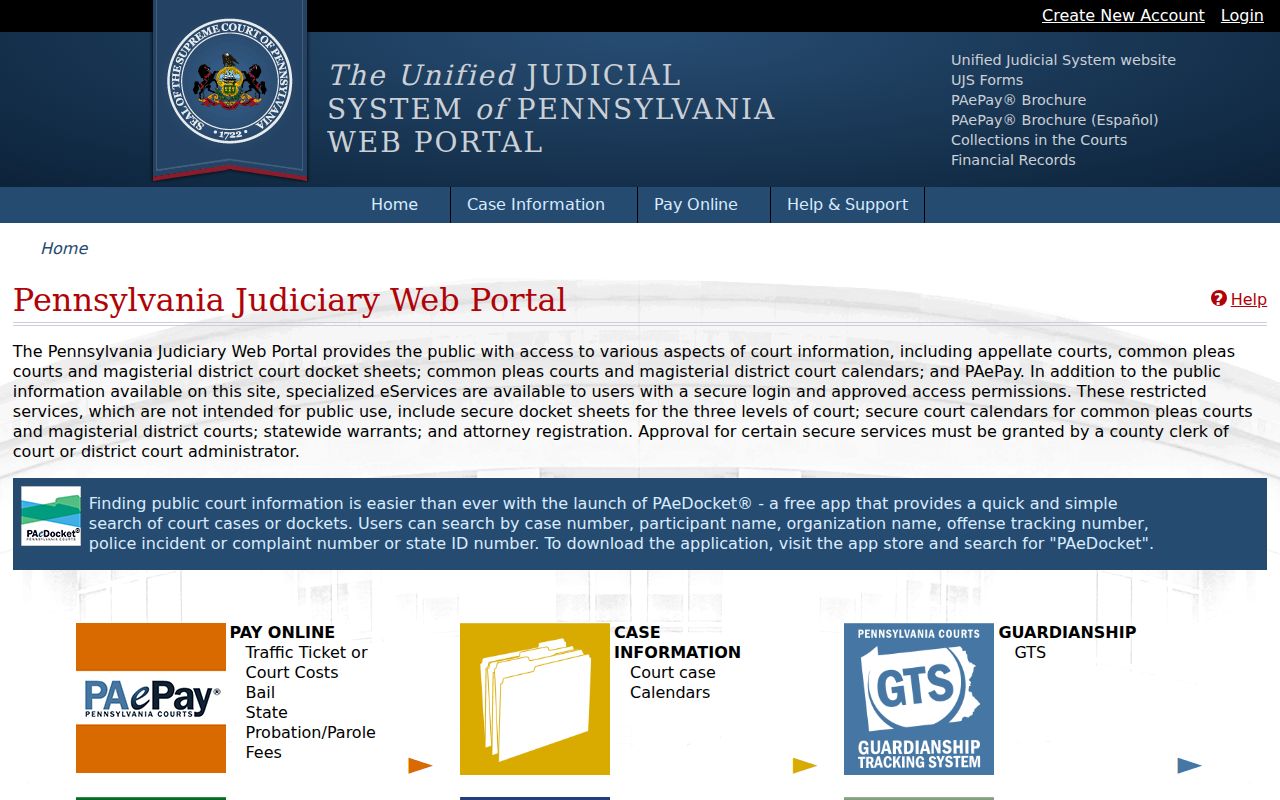
With a docket number, ask the county Prothonotary, Clerk of Courts or court administrator about its free terminal, file location, copy fee and certification route. Call for filing details or visit for public files. A result can show:
- Docket number, court and case caption.
- Public participant names and roles.
- Filing dates, events and scheduled dates.
- Charges or claims, disposition and costs.
- A docket sheet or case-information link.
Federal cases use PACER: $0.10 per page, a $3 cap on most documents, free courthouse terminals and a quarterly waiver at $30 or less.
Pennsylvania Vital-Record Indexes
Pennsylvania's Department of Health Division of Vital Records keeps statewide birth and death records from 1906 forward. Under the Vital Statistics Law of 1953, 35 P.S. §§ 450.101 et seq., birth reports are closed for 105 years; death records become public after 50 years and move to the State Archives. PHMC's birth index covers 1906-1913 and its death index 1906-1968. These indexes are leads, while a certified certificate comes from the Department of Health.
Order an eligible certificate online, by mail or at one of six branch offices. The standard fee is $20 per certificate, with a $10 online service charge; mail requests use a check or money order, not cash. A ten-year death search costs $45, plus $25 for each added decade. Before public access, birth applicants must be the named person, an eligible close relative or an authorized representative; death applicants must meet a related, estate or direct-interest rule. Applications need a signature and acceptable ID. A mature death record may have a non-certified archival copy route, but a certified copy still comes from Vital Records.
The Pennsylvania birth-certificate page shows eligibility, ID and application routes for records that remain restricted.
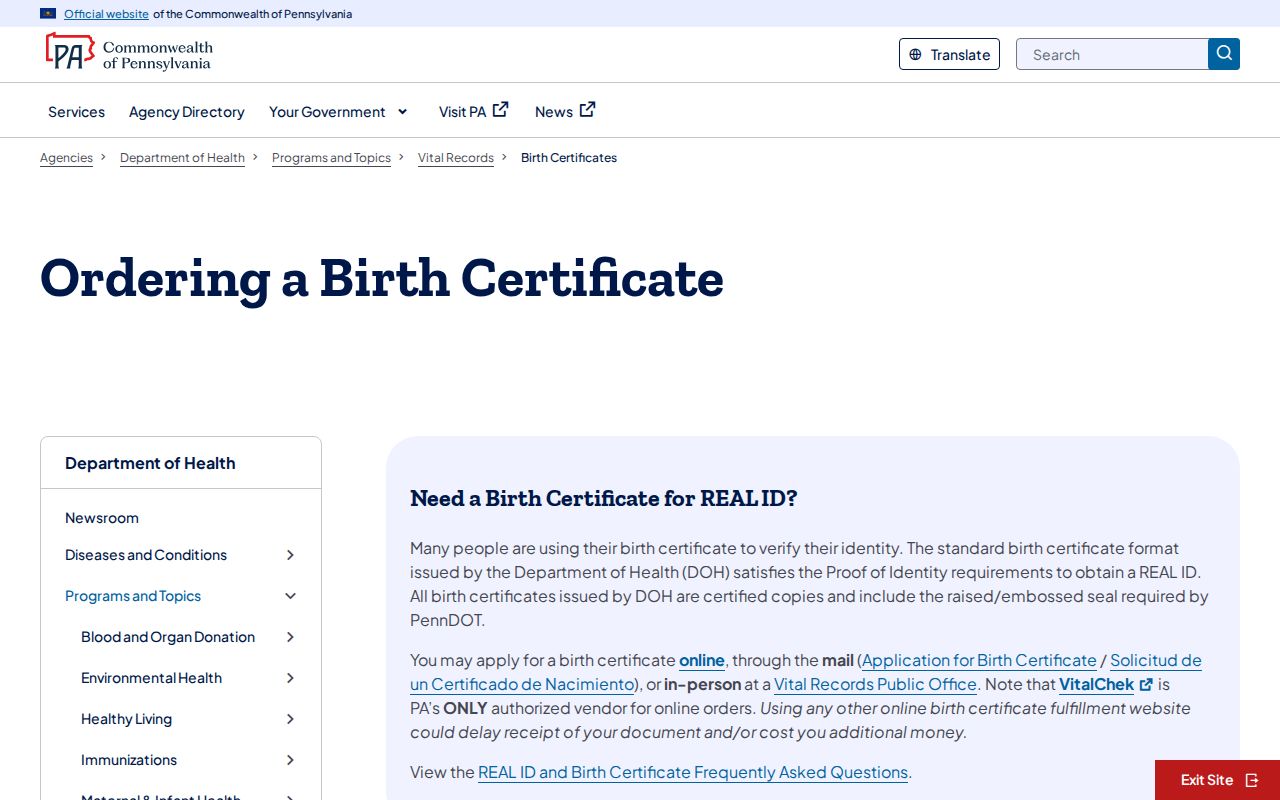
Use an index result to identify a likely event and county, then follow the correct application path. For events before statewide registration began, ask the county courthouse, municipal register, church or local archive; coverage and copy steps differ across Pennsylvania.
Pennsylvania Voter Record Limits
The Department of State status form checks one voter, not a street roster. If no match appears, use the county voter office or call 1-877-VOTESPA. Moves, spelling, inactive status and address protection can affect results. Status may show registration and polling details, never ballot choices.
Pennsylvania's full SURE export is separate: $20 for one or all counties, electronic delivery and an affirmation for election, political or law-enforcement use. Internet publication is barred. Public fields can include name, address, birth date, party, status, polling place, districts and vote history; signatures and unique identifiers are restricted.
| First and last name | Use the registered spelling or a prior surname. |
|---|---|
| Date of birth | Optional same-name detail. |
| County | One of Pennsylvania's 67, needed for local requests. |
| Status result | Registration or no match, with polling detail; not a full file. |
Ask the county office to fix a record. A missing name may be unregistered, protected or entered another way.
Pennsylvania Adoption Records for Reunion
Someone looking for a birth relative should use Pennsylvania's official Adoption Information Registry, PAIR, rather than treat adoption files as open name records. PAIR provides medical and social history and can support identifying information when the people involved have given the required consent. There is no public identifying adoption index.
An adoptee, adoptive parent or birth relative can submit signed hard-copy forms. The court that finalized an adoption may provide non-identifying information or arrange a search for consent, but neither the court nor an agency must locate a birth parent. Use the PAIR instructions to confirm the right form and current submission route before mailing personal records.
This process is different from checking a public birth index. It respects the privacy choices attached to an adoption while giving relatives a formal path to share information when the program's rules allow it.
Pennsylvania Probate Records and Affiliations
For an estate question, check the county Register of Wills or Orphans' Court, then compare executor or heir names with a deed or obituary. FamilySearch's Pennsylvania probate collection spans 1683-1994 and may follow a parent county when boundaries changed. Sensitive filings can be sealed.
For a known business, use Pennsylvania Business Filing Services by entity name or file number. Ordinary entities are not searchable by owner or address. A written complete-history search costs $15 per entity; phone staff at 717-787-1057 can search two names per call, 8:00 a.m.-4:45 p.m. PALS checks public license status and discipline across 29 boards; updates may lag 48 hours.
Obituaries and school collections add family or classmate leads. Check the date and community; Pennsylvania city directories provide a separate historical trail.
Pennsylvania Custody Records and Registry Searches
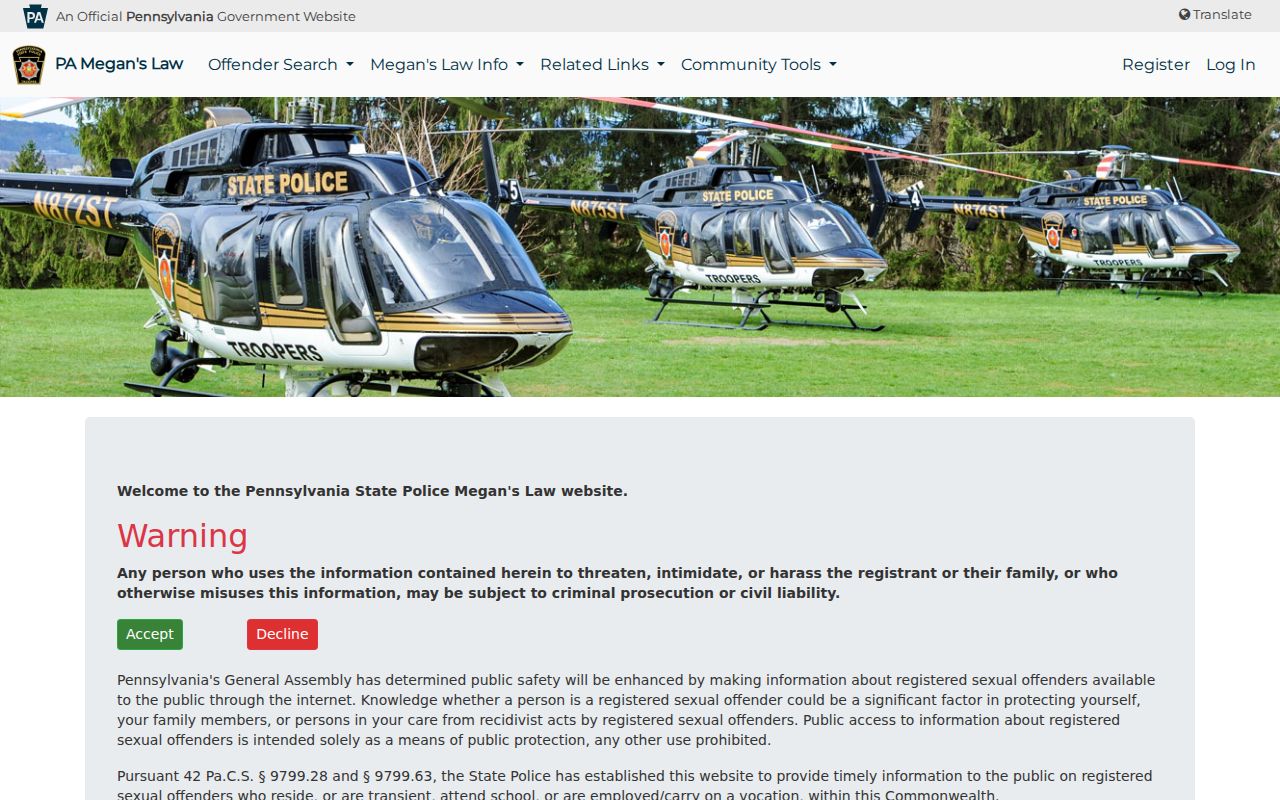
The Pennsylvania Megan's Law public site supports name, community and radius searches, plus email notices. It warns that entries can be out of date and that fingerprint comparison is needed for positive identification. Its information is for the custodian's public-safety purpose, not a substitute for a court docket or a general household list. The Pennsylvania Megan's Law search links to the registry and its use warnings.
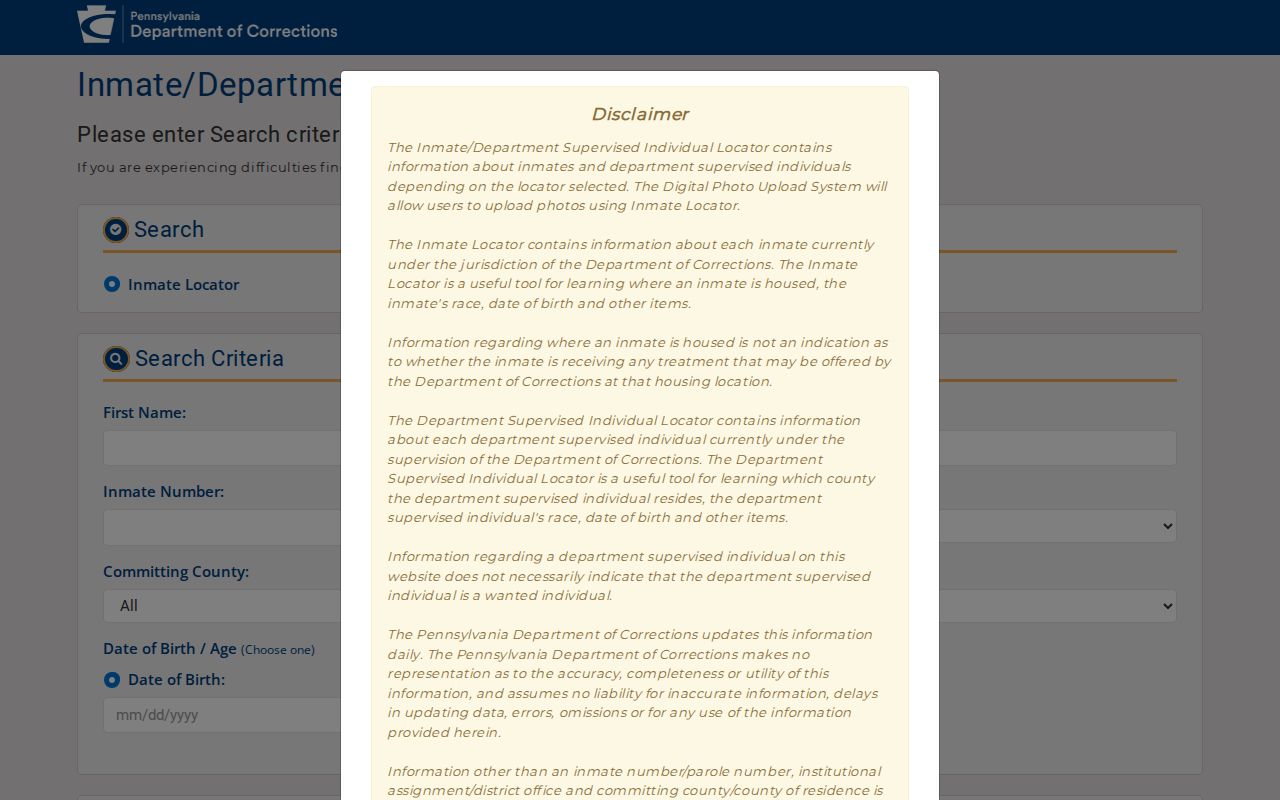
For state-sentenced custody, the DOC Inmate and Parolee Locator is updated daily and can be searched with a last name or inmate number. It also offers committing county, current location and approximate age filters, but excludes county or federal custody and may include self-reported details. The visible DOC locator form shows the fields available for the state search.
Use these systems only for the official purpose they describe. A custody location or registry entry does not establish that a record belongs to a person with a similar name or that the person lives at the searched address.
Pennsylvania RTKL Records Requests
If a portal fails, contact the custodian. Use a courthouse terminal, office phone, library or county archive for older vital, probate and directory material. State Archives finding aids can route a request. Name the person, county, record and date range.
The Pennsylvania Right-to-Know Law (RTKL), Act 3 of 2008, lets a U.S. resident request an existing agency record through its open-records officer or the state form. Agencies generally answer within five business days, with a limited written extension. Black-and-white copies cost at most $0.25 per page; search, retrieval and review charges are generally barred. RTKL does not require a new list or an answer to an open-ended question.
Ask for inspection or copies, and use mail when offered. Sealed, destroyed, exempt or never-digitized material may remain unavailable.
Privacy in a Pennsylvania Resident Lookup
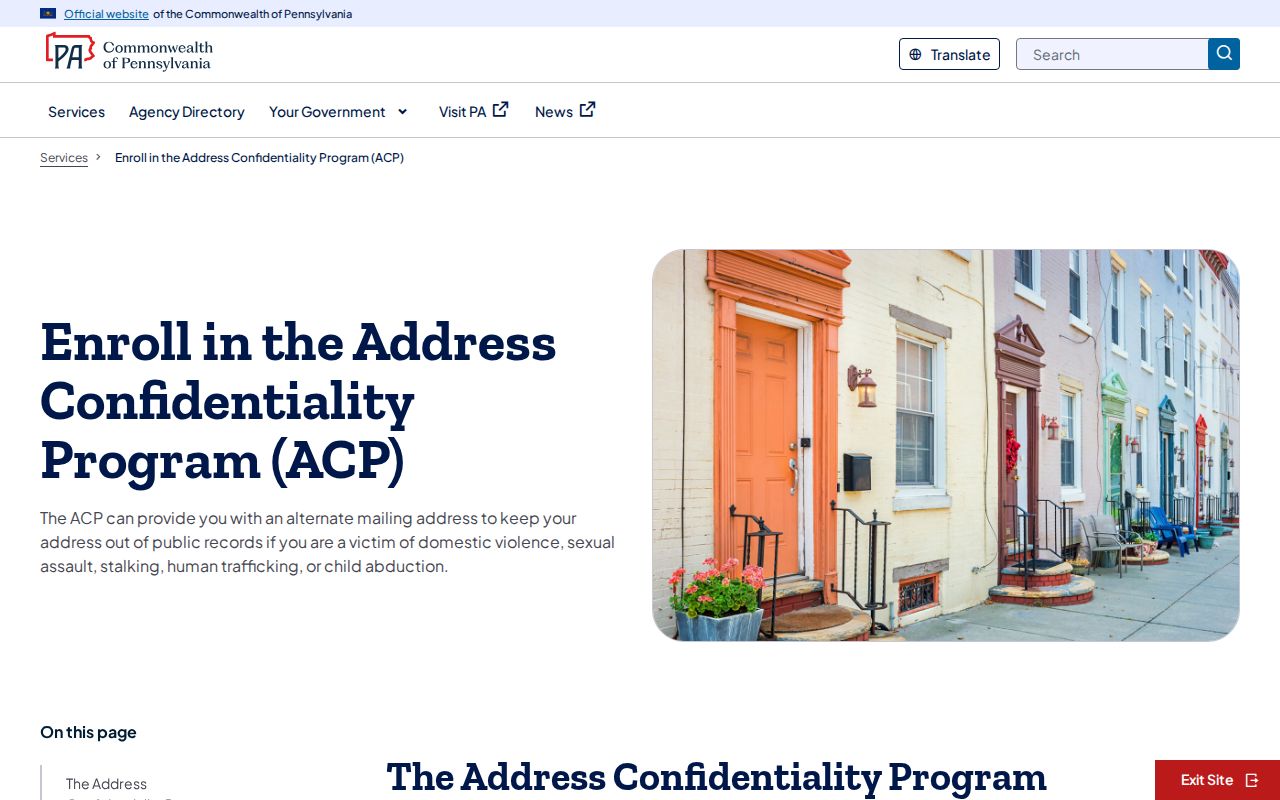
Pennsylvania's Address Confidentiality Program (ACP), run by the Office of Victim Advocate, gives eligible survivors a substitute mailing address for many government and court records, including voter registration. Participants renew every three years. The program is not witness protection and does not erase every old record, so a missing address can reflect a safety safeguard rather than a bad search. Pennsylvania has no single deletion route for every public record. Commercial services may accept an opt-out using an exact profile or matching name and address, with email verification and a repeat check after re-crawling; removal does not change the deed, voter or court record behind it.
The ACP enrollment page explains eligibility, substitute-address enrollment and mail handling.
Corrections go to the custodian: assessment errors to the county assessment office, deed errors to the Recorder of Deeds or a court, voter errors to county registration staff, and docket identity issues to the filing court. An RTKL request cannot force an office to rewrite its record. Pennsylvania stalking law, 18 Pa.C.S. § 2709.1, covers repeated conduct intended to cause fear of bodily injury or substantial emotional distress.
Lawful use. Use public records for personal, lawful research and respect safety limits. Do not use a name or address trail to follow, threaten, harass or intimidate anyone.